When Are Tomatoes in Season?
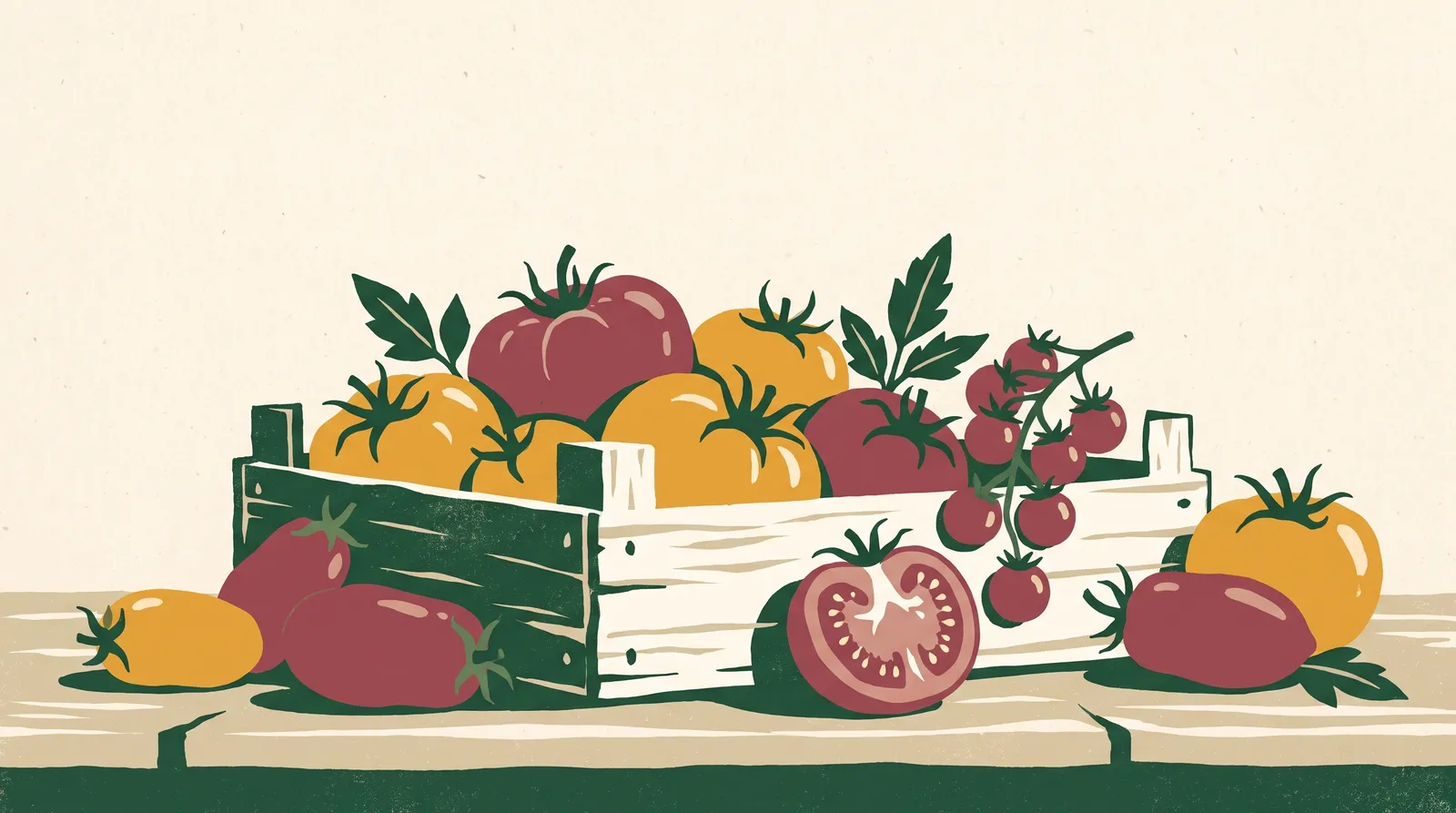
Tomatoes season by U.S. region
| Region | Typical window | Source |
|---|---|---|
| Georgia | June–October (limited May & November) | UGA Extension |
| Florida | October–June (into July); North Florida peaks mid-June | USDA NASS / FDACS |
| Texas / South-Central | Summer + fall | ACL regional list |
| California | May–November | UC ANR |
| New York | July–October | NYS Ag & Markets |
| Midwest (Great Lakes) | Summer + fall | ACL regional list |
| Pacific Northwest | Summer + fall | ACL regional list |
Where a source publishes only season-level timing ("summer + fall"), we show exactly that — regional month precision exists only where an extension calendar provides it. Weather moves every window; your market's growers are the final word.
How the season moves across the country
Tomatoes show the national south-to-north wave at its sharpest. Florida grows them through fall, winter, and spring — the state's harvest ends in early summer, right when Georgia (June–October) and then the Northeast (July–October in New York) are getting started. California's long May–November season runs alongside. A naive "tomatoes = summer" calendar is simply wrong for Florida shoppers; their best local months are the ones everyone else calls the off-season.
The national peak for tomatoes — like every warm-season market crop — is July–August. See what's in season right now for the current month's full national list, or your state's harvest calendar for local timing.
How to pick tomatoes at the market
Touch matters more than looks: gently squeeze for firmness, skip anything bruised, wilted, or tired-looking — and remember the Texas A&M AgriLife rule that "the prettiest tomato may not be the tastiest." Market tomatoes should be vine-ripe: harvested mature, which is exactly what a local grower can do that a long-haul shipper can't.
Storing tomatoes once you're home
Keep whole tomatoes on the counter, never in the fridge — chilling below 45–55°F causes pitting, discoloration, and a tomato that never finishes ripening (University of Tennessee Extension). They're also a high ethylene producer, so keep them away from ethylene-sensitive crops like cucumbers, summer squash, and green beans. Rinse only right before eating, and refrigerate cut or cooked tomatoes within 2 hours (USDA NIFA).
The storage science, in four rules
- Warm-season vegetables have a chilling-injury danger zone of 45–55°F — cucumbers and summer squash are highly sensitive; snap beans, muskmelon, and tomatoes moderately so (University of Tennessee Extension).
- Commercial growers use a two-cooler rule: 32°F for sweet corn and ripe muskmelon; 50°F for green beans, cucumbers, summer squash, ripe tomatoes, and watermelon.
- Cantaloupe, peaches, and tomatoes produce ethylene as they ripen; snap beans, cucumbers, and summer squash are damaged by it — store the two groups apart.
- Cut, peeled, or cooked produce must be refrigerated within 2 hours, and melon rinds should be rinsed before cutting so the knife doesn't carry surface bacteria into the flesh (USDA NIFA).
Frequently asked questions
When are tomatoes in season?
June/July through October across most of the U.S., peaking July–August — Georgia runs June–October, New York July–October, California May–November. Florida is the inversion: its tomatoes are harvested October through June, ending as everyone else's begin.
Why are Florida tomatoes in season in winter?
Florida grows tomatoes as a cool-season crop — summer there is too hot and wet. Harvest runs October–June across the state's growing regions, with North Florida peaking around mid-June before the season hands off to Georgia and points north.
Should tomatoes go in the refrigerator?
Not whole ones. Temperatures below 45–55°F cause chilling injury — pitting, off-color, and halted ripening — per University of Tennessee Extension. Counter only, away from ethylene-sensitive vegetables; once cut or cooked, refrigerate within 2 hours.
How do I pick a good market tomato?
Gently squeeze — you want firm, with some life in it, not soft or bruised. Texas A&M's picking guide is blunt: the prettiest tomato may not be the tastiest. Ask the grower which were picked ripe; vine-ripened is the whole advantage of buying local.
Where to buy tomatoes in season
The freshest route is direct: find a farmers market near you, browse farm stands and u-pick farms by state, or search by ZIP with the market finder. In-season, direct-from-farm tomatoes were usually picked within a day of the table.
Know what's in season before you shop
A short seasonal email: what's peaking at farmers markets this month and what's worth the trip. No spam, unsubscribe anytime.
→ What's in season right now · Month-by-month calendar · Season Finder tool
More produce guides: Sweet Corn · Watermelon · Peaches · Apples · Cantaloupe · Cucumbers · Summer Squash · Green Beans
Unusual finds at the market: Pawpaw · Ground Cherry · Purslane
Sources
- UGA Extension — Georgia's Month-by-Month Produce Guide
- New York State Dept. of Agriculture & Markets — Harvest Chart
- UC ANR — California Harvest Calendar
- Administration for Community Living — Seasonal Produce Chart by Region
- FDACS — Buy Fresh From Florida: Seasonal Produce
- Texas A&M AgriLife Extension — A Guide to Picking Produce
- University of Tennessee Extension — Postharvest Handling (Getting the Most Out of Your Crops)
- USDA NIFA — Guide to Washing Fresh Produce
Harvest windows are typical ranges from state Cooperative Extension calendars and USDA regional sources — not forecasts. Weather shifts every season by weeks; confirm locally at your market.