What Are Ground Cherries?
What it is
Ground Cherry · Physalis pruinosa / pubescens
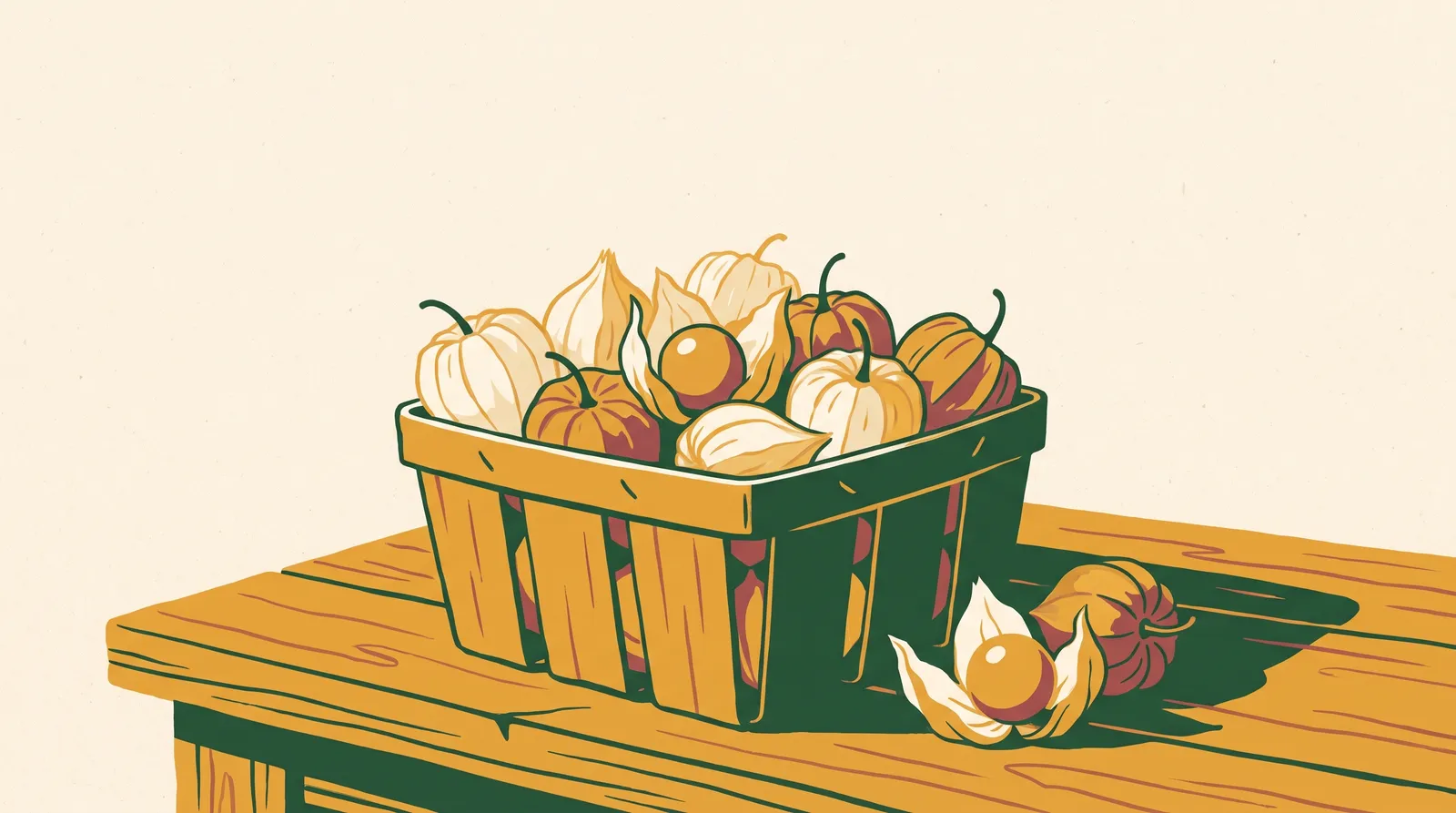
A ground cherry is the fruit of Physalis pruinosa or P. pubescens, in the nightshade family — close kin to the tomatillo and the goldenberry (Physalis peruviana). Each waxy berry ripens hidden inside its own papery husk (the calyx), which is where the 'husk cherry' name comes from.
Why you won't find it in grocery stores
Two reasons, both economic: ripe fruits naturally drop to the ground, so harvest means gathering fallen fruit by hand — heavily labor-intensive — and the opaque husk means a farmer can't judge ripeness without opening each one. Nobody grows that at commodity scale, so the supply is small farms and market tables.
What it tastes like
A juicy, waxy berry with tiny edible seeds and a sweet-tart flavor most often described as pineapple + vanilla, with savory tomato-adjacent undertones — unmistakably a nightshade, but a dessert-leaning one.
When it's in season
Late summer through autumn — at most markets that means August and September pints.
| Region | Typical window | Source |
|---|---|---|
| Wisconsin / Upper Midwest | August–September | WI Dept. of Health Services (FMNP market chart) |
| Pennsylvania / Mid-Atlantic | Late summer through autumn | Penn State Master Gardeners |
| North Florida | A spring crop — sow in August for a fall crop | UF/IFAS Extension, Duval County |
| Hawaii (poha) | Picks 3–5 months after transplant; heaviest in summer | Univ. of Hawaiʻi CTAHR (HC-3) |
| National peak | August–September | Synthesis of the sources above |
Windows are typical ranges from the extension sources below — regional rows exist only where a source publishes them. Weather moves every window; your market's growers are the final word.
How to spot it at a farmers market
Sold by the pint or half-pint, each berry inside a dry, light-beige papery husk. Ripe = a golden-yellow to orange-yellow waxy sheen inside a tan husk; skip green-tinged fruit. Market ID trick: a ground-cherry husk has 5 ribs, a goldenberry husk has 10 — count the ribs and you'll never confuse them.
How to use it
We link to trusted preparation guides rather than writing recipes — these are the ones we'd hand a friend (all checked and working as of our last update):
Frequently asked questions
What do ground cherries taste like?
Sweet-tart — most people land on pineapple with vanilla, with a savory tomato-family undertone. The berry is juicy and waxy with tiny edible seeds.
Are ground cherries safe to eat?
The ripe golden fruit is. Green fruit, leaves, and the papery husk are toxic — they carry nightshade alkaloids (solanine/solanidine), highest in unripe berries. And if you're allergic to tomatoes, skip ground cherries entirely.
How do I tell a ground cherry from a goldenberry?
Count the husk ribs: ground-cherry husks have 5, goldenberry husks have 10. Goldenberries (Physalis peruviana) are the larger South American cousin sold in supermarkets; ground cherries are the smaller market-table native.
When are ground cherries in season?
Late summer through autumn — August and September are the pint-basket months at most farmers markets.
Where to find it
Small growers are the whole supply chain for produce like this. Ask at your local farmers market, check farm stands near you, or search by ZIP with the market finder — and if a vendor doesn't have it, ask who might; growers know each other.
Meet the market's stranger produce
A short seasonal email: what's peaking at farmers markets this month — including the unusual stuff worth asking for. No spam, unsubscribe anytime.
→ What's in season right now · Month-by-month calendar
More unusual finds: Pawpaw · Purslane — or the everyday crops: Tomatoes · Sweet Corn · Watermelon · Peaches
Sources
- Penn State Master Gardeners — Off the Beaten Path: Ground Cherries
- K-State Research & Extension (Butler Co.) — Ground Cherry
- NC State Extension — Physalis (plant profile)
- SARE — Goldenberry Fact Sheet (LNE18-362)
Identification and safety guidance above comes from university extension and peer-reviewed sources. When foraging or trying unfamiliar produce, buy from a knowledgeable grower rather than self-identifying in the field — look-alikes are real, and your market vendor handles them every week.