First Time at a Farmers Market? Here's How to Shop Like a Regular
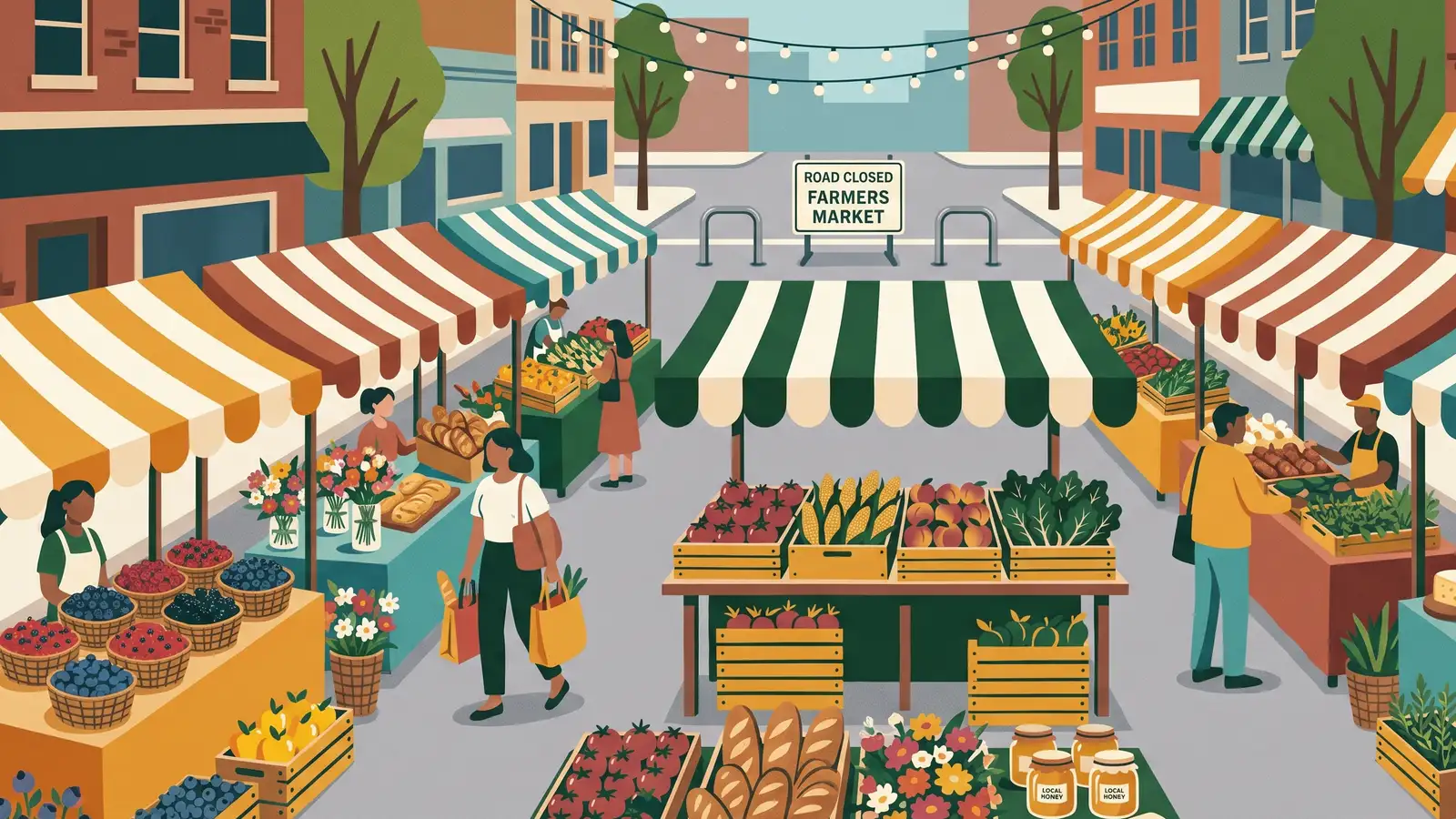
When should you go?
Timing is the one real decision. Arrive in the first hour for the widest selection and the items that sell out — popular produce, eggs, and baked goods. Arrive in the final 30–60 minutes if you're hunting deals, since many vendors would rather discount what's left than load it back into the truck.
You usually have to pick one. The early crowd gets the heirloom tomatoes and the last dozen eggs; the late crowd gets "make me an offer on this flat of peaches." Neither is wrong — just know which one you're after before you go. Weekday markets tend to be calmer and easier for a first visit than the big Saturday ones, if your schedule allows it.
What to bring
Pack cash in small bills (some vendors are cash-only and few love breaking a $50 for a $4 purchase), a reusable tote or basket, and your EBT card if you're on SNAP. A small insulated bag is worth it if eggs, meat, or dairy are on your list and you're not driving straight home.
That's the whole kit. You don't need a fancy market basket or a plan — half the point is wandering and seeing what looks good. If you forget everything else, bring cash and a bag; you can improvise the rest. Many markets now process cards at a central booth, but cash still moves you through the stalls fastest and keeps the small vendors from eating card fees.
How payment actually works (cash, cards, and SNAP/EBT)
Cash is universal. For cards and SNAP/EBT, most markets run a central information or token booth: you swipe there, get wooden tokens or paper scrip, and spend those with individual vendors. A growing number of markets also run Double Up Food Bucks, which matches SNAP dollars spent on produce up to a daily cap.
If you use SNAP, this is the most valuable thing to know: with a Double Up match, you're buying fruits and vegetables at an effective 50% off, which often makes the market the cheapest produce in town. Ask at the info booth how their EBT and match program works — they're used to the question and happy to walk you through it. To find a participating market, start with our list of farmers markets that accept SNAP/EBT.
Buy the season
The single best habit is to build your basket around what's in peak season rather than arriving with a fixed shopping list. In-season produce is what's piled high, freshest, and cheapest — and it's the stuff a market does far better than a grocery store.
A market in February looks nothing like a market in August, and that's the appeal, not a limitation. Strawberries in spring, tomatoes and corn in late summer, squash and apples in fall. If you find yourself disappointed that there are no fresh berries in October, you're shopping the market like a supermarket. Let what's abundant decide dinner, and you'll eat better and spend less. (For how the prices really compare, see farmers market vs grocery store.)
Talk to the farmers — it's the underrated part
The vendors grew or made what they're selling, and most love talking about it. Ask what's best today, how to cook the thing you've never seen before, or what's coming next week. It's the fastest way to shop well — and it occasionally gets you the last bunch at a discount or a free handful of herbs.
This is the difference between a market and a grocery store that no app replicates. A farmer will tell you the early peaches are better for baking and the later ones for eating, or hand you a sample, or explain why their eggs have orange yolks. You don't have to make small talk if you're shy — but a simple "what would you grab today?" opens up the whole experience and usually improves what ends up in your bag.
The unwritten rules (market etiquette)
A few simple courtesies: don't manhandle the produce — ask before squeezing the tomatoes — don't haggle over fair set prices, bring your own bags, and have your cash ready so the line keeps moving. Bring well-behaved dogs only if the market allows them.
None of this is strict, but it's the difference between reading as a regular and reading as someone who wandered in from the supermarket. Vendors price fairly because they're selling their own labor; treating a market like a flea market to be negotiated down tends to land badly. If you want a better price, buy a whole flat, take the seconds, or come late — all of which vendors are glad to do.
First-timer mistakes to skip
The common ones: arriving with a rigid list and leaving frustrated, bringing only big bills or no cash, going at noon and finding the good stuff gone, and overbuying perishables you won't finish. Each is easy to avoid once you know it.
Also: don't assume everything is organic or local just because it's at a market — some markets allow resellers, so if it matters to you, ask "did you grow this?" And don't skip the market because you think it'll be expensive; that's usually based on comparing the wrong items. Buy produce and eggs there, get your staples at the store, and the math works out fine for most households.
Your first basket
Keep it simple and low-risk: a dozen eggs, a loaf of bread from a bakery stall, and two or three in-season vegetables you'll actually cook this week. Add a small treat — a pint of berries, fresh cut flowers, a pastry — because that's half the fun.
You don't need to do a full week's grocery run on your first visit. A small, deliberate basket lets you taste the difference, learn the layout, and figure out which vendors you'll come back to — without overspending or wasting food. Most people who become market regulars started with exactly this: eggs, bread, and whatever looked best. Ready to go? Find a farmers market near you by state.
Frequently asked questions
What should I bring to a farmers market?
Bring cash in small bills (many vendors prefer it and some are cash-only), a reusable tote or basket, and your EBT card if you use SNAP. A little cooler bag helps if you're buying eggs, meat, or dairy and won't head straight home.
What time should I go to a farmers market?
Go early — within the first hour — for the best selection and the freshest, most popular items, which sell out. Go in the last 30–60 minutes if you care more about deals, since some vendors discount remaining stock rather than pack it up. You usually can't get both.
Can I use a credit card or SNAP/EBT at a farmers market?
It varies by market. Many markets have a central booth that processes cards and EBT and issues tokens you spend with vendors; others are cash-first. A growing number run Double Up Food Bucks, which matches SNAP spending on produce. Check the market's info booth when you arrive.
Do I have to haggle at a farmers market?
No. Prices are generally set and fair, and haggling over a $3 bunch of carrots mostly just annoys the person who grew them. The real discounts come from buying in bulk, buying 'seconds' (blemished produce), or shopping near closing time — not from negotiating.
What's the best thing to buy on a first visit?
Start with whatever is in peak season and piled high — that's the freshest and best-priced. Eggs, a loaf from a bakery stall, and a couple of vegetables you'll actually cook that week are a great, low-risk first basket.
Market basics & programs: Double Up Food Bucks · WIC at the market · Find markets near you