What's in Season in November?
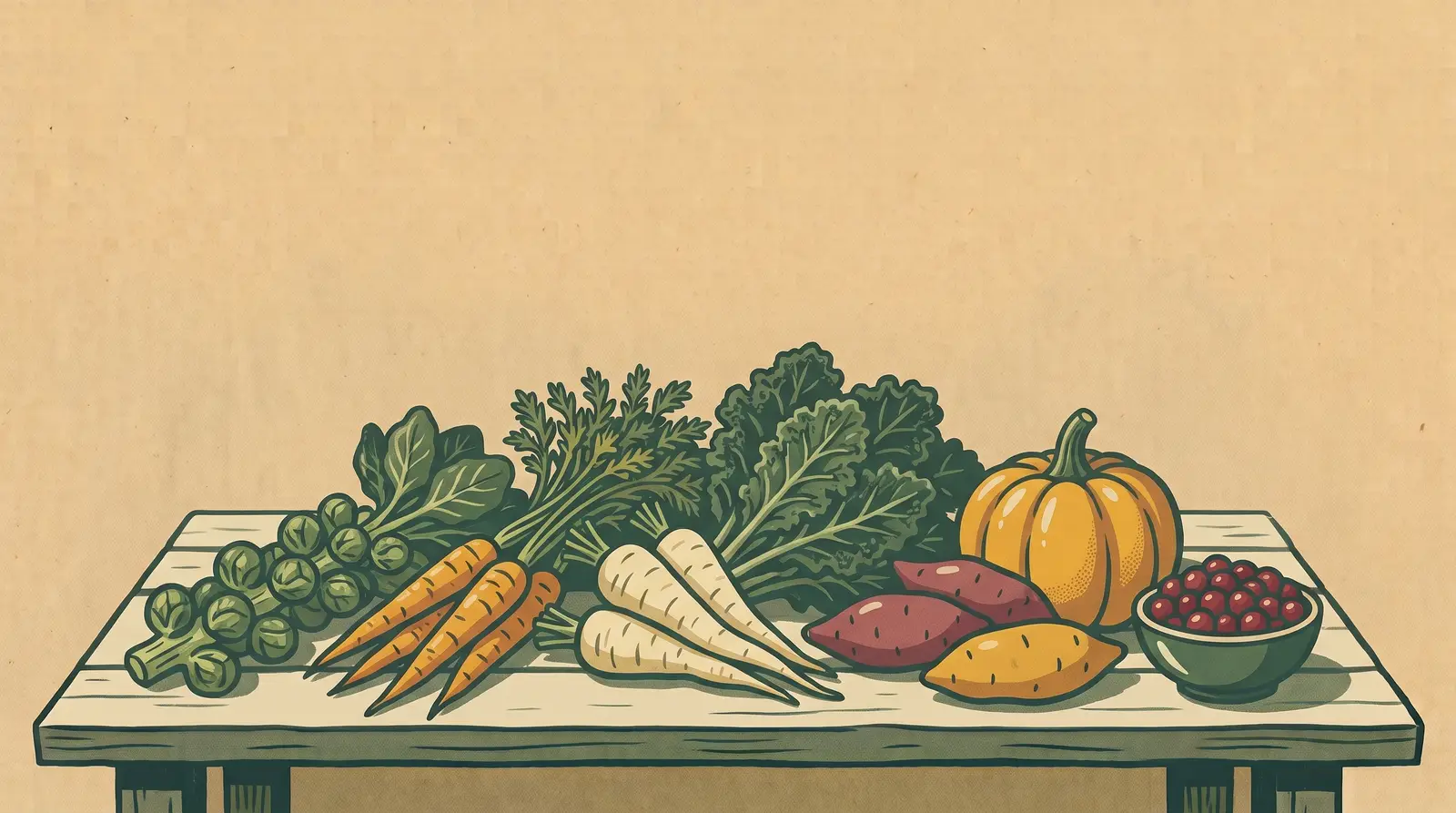
Reliably in season across most of the country
Brussels sprouts, cabbage, carrots, kale, leeks, parsnips, sweet potatoes, winter squash, cranberries, and apples and pears transitioning to storage in the North.
November region by region
The U.S. runs on more than one harvest clock — the Gulf South peaks in winter, the desert Southwest is a November-to-April operation, and California barely pauses. Here is November in each region, from the same Cooperative Extension calendars behind our state guides.
| Region | Typically in season in November |
|---|---|
| Northeast | Brussels sprouts, kale, leeks, cabbage, carrots, beets, winter squash, potatoes, apples, pears |
| Midwest & Upper Midwest | Storage crops: winter squash, potatoes, onions; cabbage, carrots, parsnips, rutabaga, turnips; apples |
| Southeast | Collards, kale, lettuce, broccoli, cabbage, cauliflower, carrots, radishes, mustard and turnip greens, beets; sweet potatoes |
| Gulf & Deep South | Winter greens, broccoli, cabbage, cauliflower, carrots, celery, beets; grapefruit and oranges; big winter onion and citrus seasons begin |
| Mountain West | Storage crops: winter squash, beets, cabbage, carrots, turnips, parsnips (often frost-sweetened) |
| Pacific Northwest | Apples, pears, Asian pears, kiwi, hazelnuts, walnuts, leeks, carrots, garlic, onions, potatoes, squash, mushrooms |
| California | Apples, pears, Asian pears, persimmons, kiwis, pumpkins, melons, oranges, grapefruit, tomatoes, sweet potatoes, carrots, beans, peppers, lettuce |
| Southwest Desert | Lettuce, leafy greens, broccoli, cauliflower, cabbage, carrots, celery; citrus returning; pecans |
Typical regional windows, not town-by-town guarantees — elevation, weather, and growing method shift any crop by weeks. Confirm locally at your market.
Regional highlights this month
- Southwest Desert: Arizona's winter harvest begins in earnest — lettuce, spinach, and brassicas run continuously from November through April.
- Gulf & Deep South: Florida's winter season hits stride: tomatoes, peppers, sweet corn, and citrus.
- California: California mandarins arrive alongside persimmons, pomegranates, and kiwi; northern fresh field harvest ends by the close of November.
Find it fresh near you
The month tells you what to look for; your local market tells you what's actually on the tables this week. Find a farmers market by ZIP code, browse farm stands and u-pick farms to buy at the source, or pull up your state's calendar below for the local version of this month.
Frequently asked questions
What's in season for Thanksgiving?
The classic table is genuinely seasonal: Brussels sprouts, cabbage, carrots, kale, parsnips, sweet potatoes, winter squash, and cranberries. In the North, the potatoes and squash come from fall harvest via storage — local, just not picked that week.
Where does fresh winter lettuce come from?
Mostly the Arizona low desert (Yuma and Maricopa County), whose harvest runs November through April, plus Florida and California's winter fields. America's winter salad is a southern-tier product.
Is anything freshly harvested up north in November?
The tail end: late brassicas, leeks, and hardy greens until hard frost, with Pennsylvania's field harvest essentially done by the end of the month. After that, northern “local” means well-stored fall crops.
Get each month's in-season guide
A short seasonal email: what's fresh at farmers markets this month, plus new markets and farms near you. No spam, unsubscribe anytime.
← October · In season now · Your state's calendar · December →
Pick your own in November: Apples · Pumpkins — each guide has typical picking windows by state.
Sources
- USDA SNAP-Ed — Seasonal Produce Guide
- University of Arizona Cooperative Extension — Planting & Harvesting Calendar (Yuma / Maricopa County)
- University of Arizona Cooperative Extension — Arizona's Seasonal Role in National Supply
- Texas A&M AgriLife Extension — Texas Home Vegetable Gardening Guide
- Go Texan — Texas Produce Availability Chart
- UC ANR — Harvest Calendar
- CDFA — California Agricultural Statistics
- USDA AMS — Local & Regional Food Directories
These are typical regional harvest windows from Cooperative Extension and USDA sources, not a town-by-town guarantee. Where sources conflict, we side with the state-level Extension calendar. Storage crops are labeled as such — winter "in season" in the North usually means well-stored, not freshly picked.