CSA Box: What’s Inside, What It Costs & Whether It’s Worth It
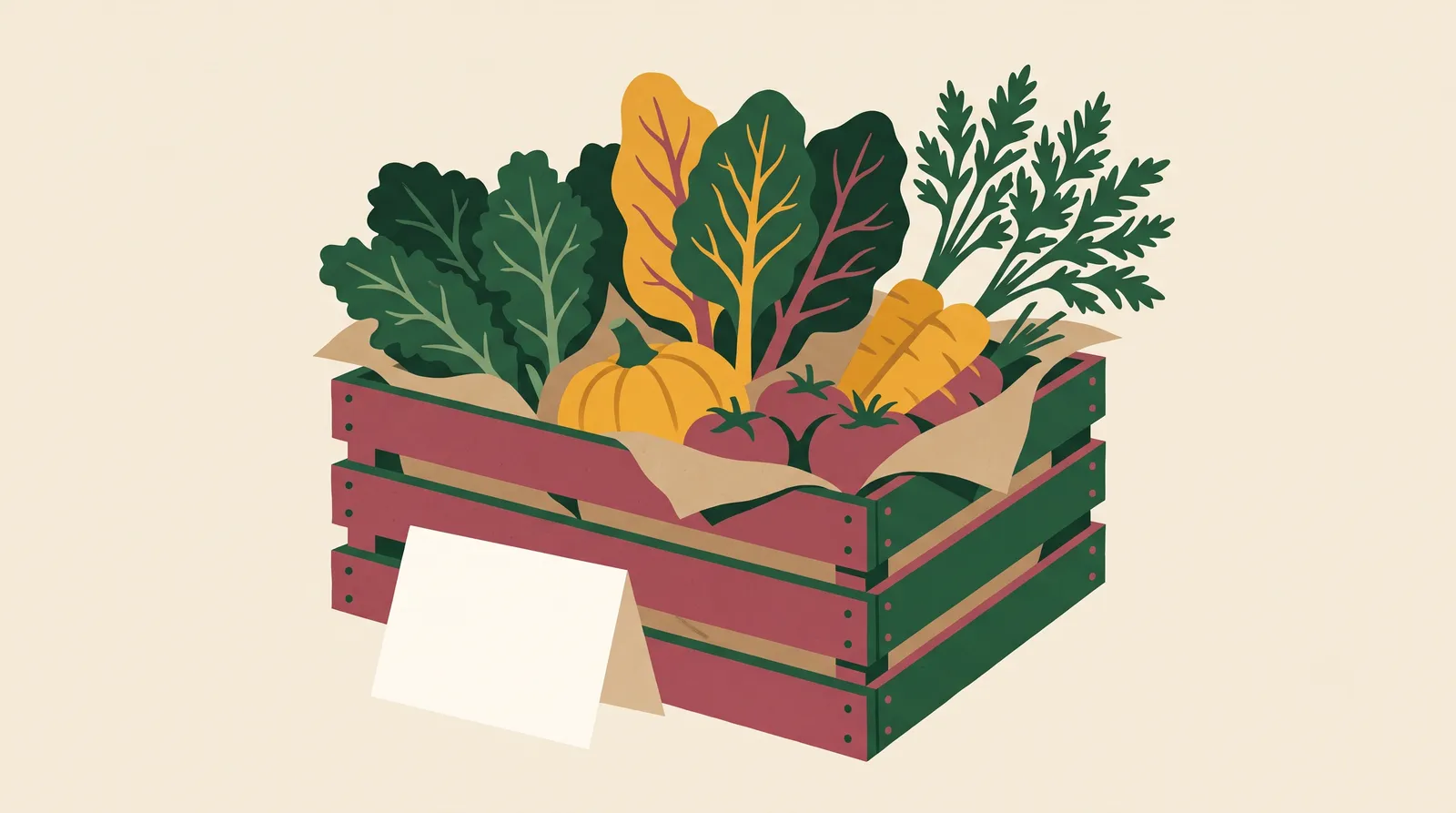
What is a CSA box?
The “CSA” in CSA box stands for Community-Supported Agriculture: a model where a group of members collectively pre-fund a local farm’s season and receive a share of the harvest in return. Your “box” is that weekly or bi-weekly share.
The USDA National Agricultural Library defines a CSA as “a community of individuals who pledge support to a farm operation so that the farmland becomes, either legally or in spirit, the community’s farm; with the growers and consumers providing mutual support and sharing the risks and benefits of food production” (USDA National Agricultural Library). In plain terms: you pay before the first seed goes in the ground, which gives the farmer operating cash for seed, soil amendments, and labor. In return, every week you pick up (or receive) a box of what that farm grew.
The shared-risk dimension is what sets a CSA box apart. University of Nebraska–Lincoln Extension explains it plainly: members “share in any loss, or bounty, for the season.” A great summer means full, overflowing boxes. A hailstorm that knocks out the tomatoes means a lighter box — and NC State Extension notes that CSAs “generally do not refund money in the event of crop loss.” You’re a member of the farm, not a customer placing an order.
For more on how the full membership model works — share types, payment options, how to join — see our broader guide: What Is a CSA? How Community-Supported Agriculture Works. And if the weekly box has you wondering whether it pays off, we run the numbers in is a CSA worth it?.
What’s inside a CSA box?
The contents shift with the growing season — you’re eating the calendar, not a pre-set grocery list. Spring brings cool-season greens; summer peaks with tomatoes and corn; fall transitions to storage crops and roots. Box weight typically ranges from around 5 pounds in early spring to up to 20 pounds at summer’s peak.
Here’s the general seasonal arc most CSA members experience:
| Season | Typical box contents | Approx. box weight |
|---|---|---|
| Early spring | Salad greens, spinach, lettuce, radishes, green onions | ~5 lb |
| Late spring – early summer | Kale, chard, peas, snap beans, herbs, early summer squash | varies |
| Peak summer | Sweet corn, tomatoes, peppers, cucumbers, zucchini | Up to 20 lb |
| Fall | Winter squash, potatoes, beets, carrots, apples, storage onions | varies |
Seasonal crop mixes are drawn from extension sources; box weights climb from roughly 5 lb in early spring to about 20 lb at peak summer, with intermediate weeks varying by farm. Contents vary by region, climate, and farm — ask your farm for an early, mid, and late-season sample list before you sign up.
Most CSAs also offer add-on shares alongside the produce box: eggs, honey, cut flowers, baked goods, sometimes meat or cheese from nearby farms. These are usually sold separately as an optional upgrade — ask what the farm carries when you inquire.
One honest note: “glut weeks” are real. When the zucchini comes in, it all comes in, and you may be staring at four pounds of it. Experienced CSA members plan meals in advance, freeze or pickle the overflow, and swap with neighbors when one crop buries them.
CSA box vs subscription delivery box
Both land produce at your door (or nearby) on a schedule, but they’re structurally different. A traditional CSA box ties you to one local farm and its seasonal harvest; a national delivery box is a flexible subscription that aggregates produce from a national network.
The definitional distinction, which is well-grounded in extension research:
- Shared risk vs no commitment. A true CSA requires an upfront seasonal payment and no refunds for weather losses — you’re funding the farm before the harvest exists. National delivery services (Misfits Market, Imperfect Foods, and similar) are flexible subscription products: skip, pause, or cancel anytime, with no seasonal commitment required.
- One farm vs aggregated network. Your CSA box comes from a specific, named farm in your region. The contents are limited to what that land grows that week. National services source across a broad distribution network — they can deliver nearly anywhere in the U.S. precisely because they’re not tied to one farm’s regional harvest.
- Farmer’s choice vs customizable. Traditional CSA boxes are packed by the farm; you get what’s in season. Most national delivery boxes let you swap items out or build your own selection online before each delivery.
A Utah CSA owner noted that members sometimes confuse the two and are “a little upset why the tomatoes aren’t ready in May” — exactly the expectation gap that comes from conflating a seasonal farm share with an always-available delivery service. For the full side-by-side — cost, freshness, food-miles, and who each model actually suits — see CSA vs. grocery delivery & meal kits.
Note on sourcing: the structural distinction above (shared risk, single farm, farmer’s choice) is well-documented by USDA and university extension. Operational specifics of national delivery services are based on their own published descriptions, which are marketing-facing — treat claims about their sourcing practices with appropriate skepticism.
If you want year-round flexibility, zero seasonal commitment, and the ability to choose every item, a delivery service fits better. If you want a direct relationship with a specific local farm and are willing to eat what the season produces, a CSA box is the right match. Both get you produce — the experience and economics are genuinely different.
Are CSA boxes worth it?
Depends who’s asking. For adventurous cooks who shop for local produce anyway, a CSA box usually costs less per week than organic retail and delivers fresher produce with zero effort. For picky eaters, small households, or anyone who can’t absorb the upfront cost or shared-risk model, the math is less favorable.
On price: a full-season share commonly runs $400–$700/year, or roughly $15–$26/week, according to NC State Extension and HarvestlyMarkets (2026 range data). The advocacy group Green America estimates members can save “up to 40%” versus retail organic — treat that as their estimate, anchored to a comparison against high-quality local or organic produce, not the cheapest conventional supermarket bin. Just Roots, a Massachusetts CSA farm, reports that 2025 full-share members received approximately $1,105 of produce against a top-tier share price of $950 — a narrower but real discount. Real savings vary by farm, region, and season.
A CSA is a good fit if you cook most weeknights, enjoy discovering unfamiliar vegetables, want to invest in a specific local farm, and can handle an occasional light week. It is a poor fit if you have very picky eaters at home, frequently miss pickups, expect to fully replace grocery trips (most CSA members still supplement with staples), or can’t absorb the shared-risk model.
The most commonly cited quit reasons among former CSA members: volume overwhelm (especially “glut weeks”), food-waste guilt, unfamiliar produce they didn’t know how to cook, and missed pickups that forfeited a week’s box. Knowing these going in makes the experience much better. If you’re not ready to commit, shopping a farm’s farmers-market stand for a season first lets you test produce quality and farm style before putting money down.
Ready to find one near you? Browse CSA farms by state on Harvestly Markets (biggest rosters: Texas and California), cross-check the USDA AMS CSA Directory, and check LocalHarvest — all three index different farms, so it’s worth running all three searches before deciding.
Frequently asked questions
What does CSA box mean?
CSA stands for Community-Supported Agriculture. A CSA box is the weekly (or bi-weekly) share of produce a member receives from a local farm after paying for a season upfront. The box contains whatever the farm harvested that week, following the season from spring greens to fall roots.
Are CSA boxes worth it?
For people who cook most nights and enjoy variety, yes — a full share runs about $15–$26/week, often below organic retail prices. For picky eaters, those who'll waste produce, or anyone who can't absorb a missed-pickup or bad-harvest year, a farmers market gives the same local food without the commitment.
Can I split a CSA box with a friend?
Yes — splitting a full share between two households is common and most farms are fine with it; you alternate pickup weeks or divide each box. Many farms also sell half shares outright, though a half share usually costs more than half the full-share price, so splitting a full share is often the better per-person deal.
What is the difference between a CSA box and a delivery box?
A true CSA box comes from a specific local farm you've pre-paid, and you share its seasonal risk — no refund if a crop fails. National delivery boxes (like Misfits Market or Imperfect Foods) are subscription services sourcing from aggregated networks: fully flexible, fully customizable, and not tied to one farm or its harvest.
How much does a CSA box cost per week?
NC State Extension cites $15–$20/week as a common per-week rate farmers use to price shares. HarvestlyMarkets puts the full-season range at roughly $18–$26/week. The annual total for a full share typically runs $400–$700 depending on region, season length, and farm.
CSA guides: What is a CSA? · Is a CSA worth it? · CSA cost calculator · Find a CSA near you
Sources
- USDA National Agricultural Library — Community Supported Agriculture
- NC State Extension — CSA Resource Guide
- LocalHarvest — CSA directory & choosing a CSA
- USDA AMS — Community Supported Agriculture (CSA) Directory
- Utah State University Extension — CSA Pricing
- Green America — Join a CSA
CSA share prices, box contents, season lengths, and pickup policies are set by each farm and vary by region and year. Pricing figures here are cited ranges from university extension and farm sources — confirm specifics with the farm before joining.